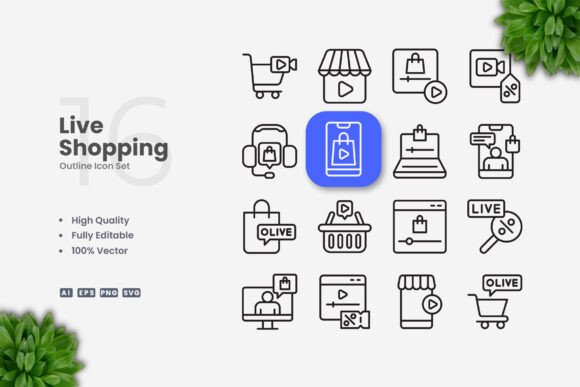
Live Shopping Graphics and Icons
As a digital publisher and blog designer, I'm always on the lookout for high-quality graphic design assets that can elevate content presentation. Live Shopping offers a simple and clean icon design that fits seamlessly into a wide range of publishing needs. Whether you're creating blog graphics, editorial layouts, or social media visuals, this asset brings a modern touch that enhances visual communication without overwhelming the reader.
First Impressions: A Modern and Polished Look
The first thing that stands out about Live Shopping is its clean aesthetic. The icon design feels intentional, with a balance between minimalism and clarity. It doesn’t scream for attention but still manages to be noticeable enough to serve as a visual cue. This makes it ideal for content that requires a professional yet approachable feel.
The design has a subtle modernity that works well in lifestyle, fashion, and e-commerce niches. It doesn’t lean too heavily into playful or decorative elements, which means it can fit into a variety of editorial moods. Whether your audience is looking for a digital guide, a downloadable printable, or a lead magnet, Live Shopping adds a layer of polish that supports a more professional brand identity.
Real Publishing Use Cases
Live Shopping isn’t just a pretty icon—it’s a versatile graphic design asset that can be used across multiple content formats. For bloggers and content creators, it can serve as a featured image, a Pinterest pin, or a header for an article. Its simplicity allows it to work well in both digital and print formats, making it a valuable addition to any content marketing toolkit.
When used in blog graphics, Live Shopping helps establish a clear visual hierarchy. It can act as a focal point in a website header, a section divider in a digital guide, or a branding element in a newsletter. Its clean lines and neutral color options make it easy to integrate into existing design systems, whether you’re working with a bold, modern theme or a more subdued, minimalist layout.
In affiliate marketing, where visuals play a key role in driving clicks, Live Shopping can help create more engaging social media graphics and Canva templates. It’s also useful for downloadable resources like worksheets, checklists, and eBook covers, where a strong visual identity can increase perceived value and trust.
Supporting Content Performance
One of the biggest benefits of using Live Shopping is its ability to improve content performance. A strong first impression is crucial for keeping readers engaged, and this icon design helps create a more visually cohesive experience. When used consistently across different platforms, it reinforces brand identity and makes your content more recognizable.
Visual hierarchy is another area where Live Shopping shines. By using it as a design element in headers, thumbnails, or banners, you can guide readers through your content more effectively. This not only improves readability but also increases the likelihood of higher click-through rates and longer session durations.
For publishers who rely on lead magnets or content upgrades, Live Shopping adds a level of professionalism that can make your digital product stand out. Whether it's a printable checklist or a downloadable resource, having a polished visual element can significantly impact user perception and trust.
Where Live Shopping Works Best
Live Shopping excels in situations where a clean, modern design is needed. It’s perfect for hero images, article thumbnails, and Pinterest pins—formats where a strong visual presence is essential. As a digital guide or editorial accent, it can add a subtle but effective touch that enhances the overall look of your content.
It also works well in newsletter headers, social media previews, and category thumbnails. These are all areas where a consistent and professional design can make a big difference in how your content is received by your audience.
Where to Use with Caution
While Live Shopping is a great design asset, it may not be suitable for every scenario. In small mobile thumbnails, for example, the details might get lost, making it less effective as a standalone visual. Similarly, in text-heavy blog images or low-contrast backgrounds, it could blend in too much and fail to serve its purpose.
For serious professional niches or corporate websites that require a very minimal visual system, Live Shopping might feel a bit too stylized. In those cases, a more abstract or monochrome icon might be a better fit.
Publisher Notes and Practical Tips
Before finalizing Live Shopping for your projects, test it on both desktop and mobile screens. Check how it looks as a thumbnail, and preview it inside a real blog layout to see how it interacts with other design elements. Make sure it works well with headline text, and test its contrast and readability against different background colors.
Try placing it beside various font styles—serif, sans serif, script, handwritten, and display fonts—to see how it holds up in different typographic contexts. Also, review the file size for web performance and compress images properly to ensure fast loading times.
Finally, confirm the commercial license before using Live Shopping on monetized websites, affiliate pages, or paid content products. This ensures you’re compliant and can use the design asset without any legal concerns.
Conclusion: A Versatile Asset for Creative Publishers
Live Shopping is a solid graphic design asset that can enhance a wide range of publishing workflows. From blog graphics to social media visuals, it offers a clean, modern look that supports editorial quality and visual communication. Whether you're working on a digital guide, a lead magnet, or a Canva template, this icon design can help elevate your content and reinforce your brand identity.